
Raising Helpful Humans: Teaching Kids Responsibility at Home
 By Speech Blubs Team•Feb 16, 2026•14 min.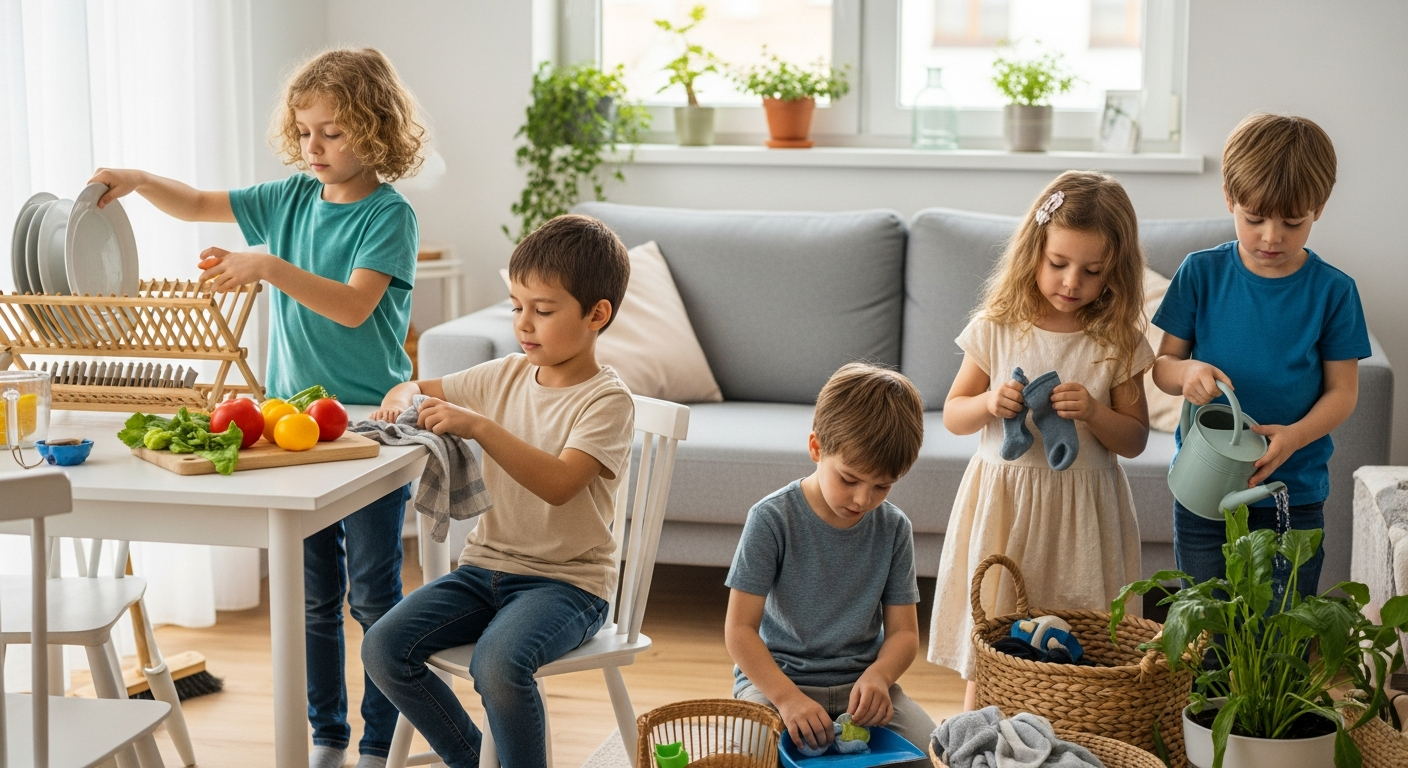
Introduction
Have you ever watched your toddler insist on "doing it myself," only to end up with shoes on the wrong feet and a trail of spilled cereal? While these moments can be messy and test our patience, they are actually the first beautiful sparks of a lifelong journey. At Speech Blubs, we believe that every child has a voice and a heart full of potential, and our mission is to empower them to "speak their minds and hearts." Part of that empowerment involves helping them navigate the world with a sense of agency and purpose.
Teaching kids responsibility at home is not a task that happens overnight, nor is it something children simply "grow into" without guidance. It is a learned skill, much like learning to walk or speak, that requires practice, modeling, and a lot of encouragement. Many parents worry that they are asking too much—or perhaps not enough—of their children. You might wonder if your child is ready to help with the laundry, or if a reward system is a good idea.
In this post, we will explore the developmental stages of responsibility, provide practical age-appropriate tasks, and discuss how to handle the inevitable bumps in the road. We’ll also show you how "smart screen time" and peer-led learning can be powerful tools in this process. By the end of this article, you will have a clear roadmap for fostering independence and accountability in your home, turning those "I do it myself" moments into a foundation for a confident, capable future.
What Does Responsibility Actually Look Like?
Before we dive into the "how-to," it’s helpful to define what we mean by responsibility. It’s more than just doing chores; it’s a mindset. Child development experts often categorize responsibility into two main pillars: contribution and accountability.
Contribution is about being a "good citizen" within the family. It’s the understanding that we all live here, and we all help out to make things run smoothly. When a child helps set the table or puts their shoes in the cubby, they are learning that their actions impact others and that they are a valued member of a team.
Accountability is the flip side of that coin. It involves owning one’s actions and the outcomes that follow. If a child forgets to put their toy away and it gets stepped on, accountability is the process of acknowledging that mistake without blame-shifting.
At Speech Blubs, we understand the importance of these foundational skills. Our company was born from the personal experiences of our founders, who all grew up with speech challenges. They knew firsthand that communication is the key to both contribution and accountability. If a child can’t express their needs or understand a request, responsibility becomes much harder to master. That’s why we’ve built a tool that blends scientific principles with the joy of play, helping children reach those vital communication milestones.
Starting Early: The Power of Modeling
You don’t have to wait until your child is in school to start teaching kids responsibility at home. In fact, the most effective teaching happens long before a formal "chore" is ever assigned. Children are like little sponges, constantly observing the adults in their lives.
Between the ages of 2 and 3, children begin to imitate everything you do. This is the perfect window to model responsible behavior. If you want your child to pick up their toys, let them see you putting your own items away. Narrate your actions: "I’m putting my keys in the bowl so I know where they are tomorrow."
If you are unsure where your child stands in their developmental journey, we offer a quick 3-minute preliminary screener. It consists of 9 simple questions and provides you with a personalized assessment and a next-steps plan. It’s a great way to see how your child’s communication and independence skills are blooming and to get a free 7-day trial of our app.
The Toddler Years (Ages 2 to 5): Small Wins and Smart Play
During the toddler and preschool years, the goal isn't perfection; it’s participation. This is the age of "parallel play," and responsibility often follows the same pattern. They want to do what you are doing.
Age-Appropriate Tasks
- The One-Toy Rule: Instead of asking them to "clean the playroom," give a specific instruction: "Please put the red blocks in this bin."
- Pet Care: A 4-year-old can help "scoop" food into a dog’s bowl (with supervision).
- Personal Hygiene: Washing hands and attempting to brush teeth. While you will still need to do the thorough brushing, letting them take the "first shift" builds a sense of ownership over their body.
Using "Smart Screen Time" as a Tool
We know that many parents are wary of screen time, and for good reason. Passive viewing of cartoons can often lead to "zoning out." However, we advocate for "smart screen time." Our app uses a unique methodology called "video modeling."
Research shows that children learn best by watching and imitating their peers. This is where our "mirror neurons" come into play—the brain's way of learning through observation. When a child sees another child in the app successfully making a sound or completing a task, they are much more likely to try it themselves.
For example, for a parent whose 3-year-old "late talker" loves animals, the "Animal Kingdom" section of Speech Blubs offers a fun, motivating way to practice sounds like "moo" and "baa." This isn't just about speech; it’s about the confidence that comes from mastering a skill. When a child feels capable in their speech, they feel more capable of following directions and taking on small responsibilities at home.
You can start this journey today by downloading Speech Blubs on the Apple App Store or Google Play Store.
School-Aged Kids (Ages 6 to 10): Building Routines
As children enter school, their world expands. They are expected to manage backpacks, homework, and social dynamics. Teaching kids responsibility at home during this stage involves creating structured routines that mirror the expectations of the outside world.
Creating a Culture of Contribution
At this age, chores should be framed not as "work" you are forcing them to do, but as their part of the family team.
- Laundry Basics: They can sort whites from colors or match socks.
- Morning Independence: Setting a physical alarm clock and getting dressed without three reminders.
- Meal Prep: Helping to set the table or even making a simple sandwich.
The Science of Motivation
Many parents ask if they should use sticker charts or rewards. The answer is a resounding yes! Responsibility is a skill, and like any skill, it benefits from positive reinforcement. Our research-backed method is built on the same principle: making learning feel like a reward in itself.
In the Speech Blubs app, children are rewarded with fun "face filters" and stickers when they complete activities. This builds a positive association with effort. You can replicate this at home with a simple chart. The key is to be consistent.
If you're looking for the best value to support your child's long-term growth, our Yearly Plan is the clear choice. At just $59.99 per year (which breaks down to only $4.99 per month), you save 66% compared to the monthly $14.99 plan. More importantly, the Yearly plan includes:
- A 7-day free trial to explore all features.
- The exclusive Reading Blubs app, which helps transition children from speech to literacy.
- Early access to new updates and 24-hour support response time.
Using Reading Blubs can be a responsibility in itself. You might set a routine where your child spends 10 minutes a day "practicing their reading" on the app. This fosters independent learning and gives them a sense of pride in their progress.
Tweens and Teens (Ages 11 and Up): Autonomy and Consequences
As children approach the teenage years, the nature of responsibility shifts from "how do I do this?" to "why should I do this?" This is the stage where natural consequences become the best teachers.
Transitioning to Accountability
For pre-teens and teenagers, responsibility is about managing their own lives.
- Hygiene Ownership: This is often a time of "hygiene regression," where a once-clean child suddenly forgets to shower. Instead of nagging, have a conversation about social expectations and self-care.
- Academic Responsibility: Let them deal with the teacher if they forget their homework. Jumping in to "save" them every time prevents them from learning how to recover from a mistake.
- Money Management: If you choose to give an allowance, this is the time to link it to specific chores or use it as a tool to teach budgeting.
Handling Neurodivergence
It’s important to acknowledge that for some children, responsibility is physically and mentally harder to track. A child with ADHD may want to be responsible but struggle with "executive function"—the brain's ability to plan and organize.
For these kids, responsibility isn't a matter of willpower; it’s a matter of scaffolding. They may need visual checklists, phone reminders, or broken-down instructions. We don't expect a child with a speech delay to "just talk," and we shouldn't expect a neurodivergent child to "just be responsible." We provide tools to help them bridge that gap.
6 Effective Ways to Instill Accountability
To truly succeed in teaching kids responsibility at home, we recommend these six strategies:
- Invite Participation: Don't just assign tasks; invite them into the process. "Should we do the dishes before or after we walk the dog?" Giving them a choice fosters ownership.
- Be Specific: Instead of "Clean your room," say, "Put your dirty clothes in the basket and your books on the shelf." Specificity reduces the feeling of being overwhelmed.
- Allow Mistakes: A spilled glass of milk is an opportunity to learn how to use a towel, not a reason for a lecture.
- Model Reflection: When you make a mistake, admit it. "I forgot to buy milk today, so I'll have to go back to the store. That was my responsibility."
- Use Natural Outcomes: If a child forgets their coat, they will be cold. Unless it’s dangerous, let the natural outcome do the teaching for you.
- Celebrate Growth: Notice the small things. "I saw how you put your shoes away without being asked. That really helped me out!"
Why Speech Blubs is a Partner in Responsibility
At Speech Blubs, we are more than just an app; we are a support system for families. We know that the journey of parenting is filled with questions. "Is my child on track?" "Are they communicating effectively?"
Our unique peer-to-peer video modeling helps children build the communication skills necessary to navigate family life. When a child can "speak their mind and heart," they are better equipped to ask for help, negotiate chores, and express their feelings.
We’ve seen incredible transformations. Parents often share stories of how their children went from frustrated and silent to confident and helpful. You can read many of these parent success stories and testimonials on our website. Seeing other families overcome similar hurdles can provide the encouragement you need to keep going.
The Financial Value of Investing in Growth
We want to be transparent about our pricing because we believe in building trust with our community. Our goal is to provide an immediate, effective, and joyful solution for the 1 in 4 children who need speech support.
- Monthly Plan: $14.99 per month. This is a great "entry-level" option if you want to try the app for a short period.
- Yearly Plan: $59.99 per year. This is our recommended choice. Not only do you save 66%, but you also unlock the full suite of "smart screen time" tools, including Reading Blubs. This plan is designed for families who are committed to long-term growth and want the best tools at the lowest price.
Choosing the Yearly plan also gives you that crucial 7-day free trial, allowing your child to fall in love with the characters and activities before you fully commit. You can create your account and start your trial today on our web portal.
Setting Realistic Expectations
As you work on teaching kids responsibility at home, remember that development is rarely a straight line. There will be days of great progress and days of regression. A child who was happily cleaning their room last week might refuse to pick up a single sock today.
This is normal! Our app isn't a "magic wand" that will have your child giving public speeches in a month, and responsibility training won't make your home perfectly tidy overnight. Instead, focus on the benefits of the process:
- Fostering a love for learning and communication.
- Building confidence in their own abilities.
- Reducing frustration through better expression.
- Creating joyful family learning moments.
Framing these activities as a supplement to your child's overall development plan—and, when applicable, professional therapy—is the most effective approach.
Practical Scenarios: Connecting Play to Responsibility
Let's look at how this works in real life. Imagine a parent whose 5-year-old struggles with the morning routine. The child is easily distracted and often forgets to brush their teeth.
The Strategy: The parent introduces Speech Blubs during a calm time of day. They navigate to the "Early Bird" section where children can watch their peers practicing morning habits. The 5-year-old sees a child on the screen excitedly brushing their teeth and getting ready.
The Connection: Later, the parent can use the "video modeling" they saw in the app as a reference point. "Remember how our friend in the app brushed their teeth? Let's see if you can do it just like them!"
By connecting a potentially boring chore to a fun, interactive experience, the child feels motivated rather than pressured. This is the heart of what we do: turning screen time into a bridge for real-world skills.
Conclusion
Teaching kids responsibility at home is one of the greatest gifts you can give your child. It is the gift of self-reliance, the gift of being a contributing member of a community, and the gift of knowing they can handle whatever challenges come their way. Whether it’s a toddler putting a toy in a bin or a teenager managing their own schedule, every step forward is a victory.
At Speech Blubs, we are honored to walk this path with you. We provide a screen-free alternative to passive viewing—a powerful tool for family connection that encourages children to interact with the world around them.
Ready to empower your child to speak their mind and heart? Download Speech Blubs on the App Store or Google Play Store today. For the best experience and the most comprehensive toolset, we highly encourage you to choose our Yearly Plan. You’ll get the 7-day free trial, the Reading Blubs app, and the peace of mind that comes with a high-value, science-backed resource. Let’s make responsibility a joyful part of your child’s growth together.
Frequently Asked Questions
1. At what age should I start teaching my child responsibility?
You can start as early as 2 years old! At this age, responsibility looks like simple imitation and modeling. While you shouldn't expect them to complete tasks perfectly, inviting them to help you pick up toys or put clothes in a hamper sets the stage for future independence.
2. Should I pay my child for doing chores?
This is a personal family decision. Some families find that tying allowance to chores teaches money management, while others prefer to keep chores as a baseline expectation of being part of the family. If you do choose to pay, consistency is the most important factor.
3. How can I help my neurodivergent child stay responsible?
Children with ADHD or autism may struggle with the "steps" involved in a task. Use visual aids, such as picture charts or digital reminders. Focus on one task at a time and offer plenty of positive reinforcement. Tools like Speech Blubs can also help by providing clear, visual peer modeling.
4. What should I do if my child refuses to help?
Avoid power struggles. Instead, use natural consequences. If they don't help pick up the blocks, the blocks go into "time out" for the rest of the day. Frame tasks with choices: "Would you like to put the books away now or after we read a story?" This gives them a sense of control while still ensuring the task gets done.
About the author