
Positive Discipline Strategies for Happy Toddlers
 By Speech Blubs Team•Feb 16, 2026•13 min.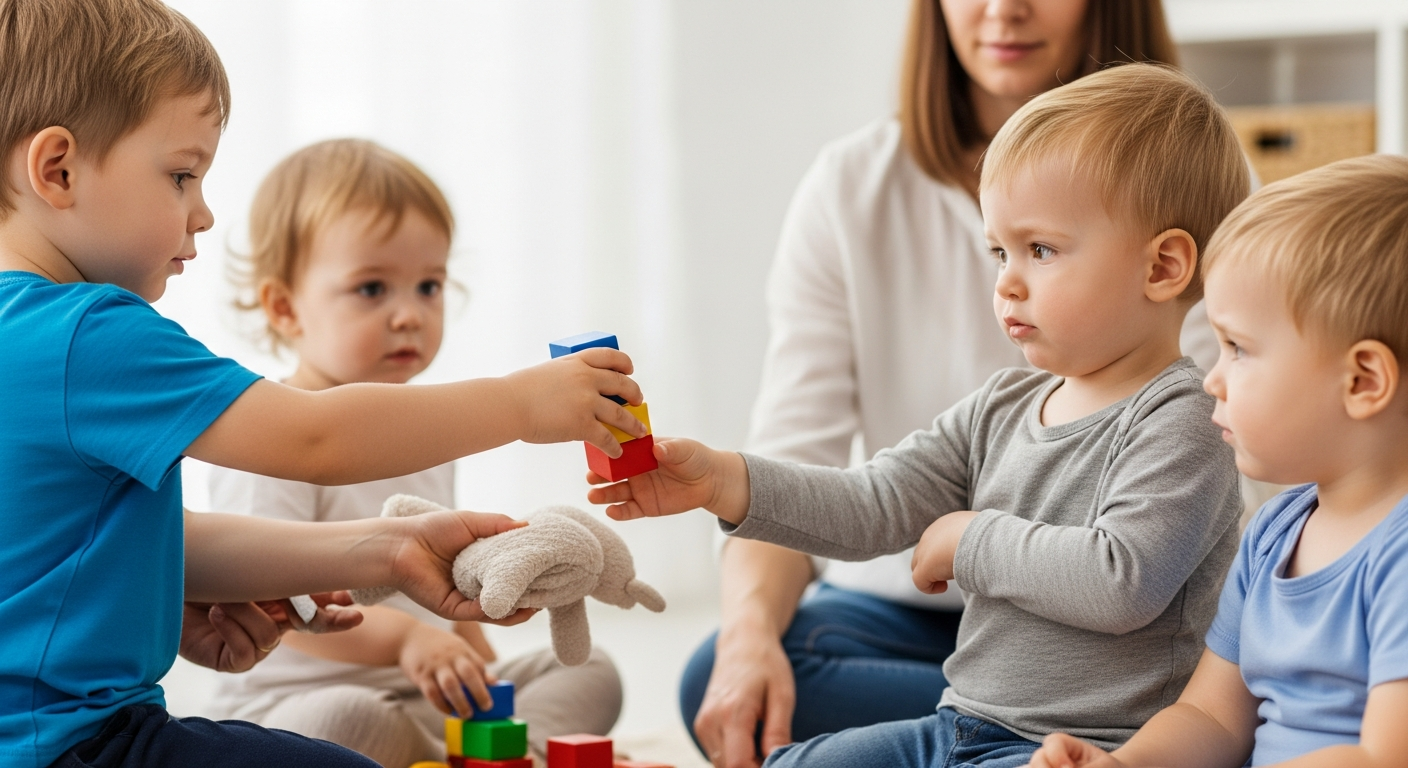
Table of Contents
- Introduction
- What is Positive Discipline?
- The Core Foundation: Connect Before You Redirect
- Practical Positive Discipline Strategies for Toddlers
- How Communication Impacts Toddler Behavior
- Enhancing Connection with Speech Blubs
- Why Consistency is Key
- Dealing with Hitting and Aggression
- Modeling the Behavior You Want to See
- Choosing the Right Tools for Your Family
- Conclusion
- Frequently Asked Questions
Introduction
Have you ever found yourself standing in the middle of a crowded grocery store, watching your two-year-old transform into a human puddle on the floor because you said "no" to a box of neon-colored cereal? Every parent has been there. That moment of heat rising in your cheeks and the desperate search for an exit strategy is a universal experience in caregiving. In these high-stress moments, it is easy to feel like our only options are to give in or to react with frustration. However, there is a middle ground that fosters long-term growth and deepens the bond between you and your child: positive discipline.
At Speech Blubs, we understand that behavior is communication. Often, what looks like a "tantrum" is actually a child struggling to express a need or a feeling that they don’t yet have the words for. Our mission is to empower children to "speak their minds and hearts," a goal that was born from the personal experiences of our founders, who all grew up with speech challenges themselves. They created the tool they wished they’d had—a joyful, effective way to bridge the communication gap.
In this post, we will explore comprehensive positive discipline strategies for toddlers that move away from punishment and toward teaching. We’ll cover how to connect before you redirect, the importance of setting realistic boundaries, and how enhancing your child’s communication skills can naturally lead to fewer behavioral struggles. By the end of this article, you will have a toolkit of empathetic, science-backed strategies to help your toddler navigate their big emotions with confidence.
What is Positive Discipline?
Positive discipline is an approach to parenting that focuses on teaching and guiding children rather than punishing them. It is rooted in the belief that children are more likely to cooperate when they feel a sense of belonging and significance. The word "discipline" actually comes from the Latin word discipulus, meaning "student" or "learner." When we discipline, we are acting as teachers, not as judges.
The Difference Between Punishment and Teaching
Traditional discipline often relies on shame, pain, or isolation (like harsh timeouts or physical punishment) to stop a behavior in the moment. While these might produce immediate results, they often fail to teach the child why the behavior was a problem or what they should do instead. Research shows that physical punishment can actually increase aggression and hurt the long-term mental health of a child.
Positive discipline strategies for toddlers, on the other hand, focus on building a warm, trusting relationship. When a child feels safe and understood, their brain is more receptive to learning. We focus on fostering self-control, problem-solving skills, and empathy. At Speech Blubs, we see this same principle at work in our "smart screen time" experiences. Instead of passive consumption, we use peer-led video modeling to teach children complex communication skills in a way that feels like play. This positive, joyful approach to learning mirror the core values of positive discipline.
The Core Foundation: Connect Before You Redirect
One of the most effective positive discipline strategies for toddlers is the concept of "Connect then Redirect." When a toddler is mid-meltdown, their "upstairs brain" (the part responsible for logic and self-control) is essentially offline. Their "downstairs brain" (the part responsible for the fight-or-flight response) has taken over. You cannot reason with a child whose brain is in survival mode.
Understanding the "Why" Behind the Behavior
Before you can address the behavior, you must address the emotion. Behavior is like an iceberg; the hitting or yelling is just the tip that you see. Beneath the surface, the child might be hungry, tired, overstimulated, or simply frustrated that they can't communicate their desires.
We encourage parents to ask themselves:
- Does my child need a snack or a nap?
- Are they being asked to do something beyond their developmental level (like sharing a favorite toy)?
- Are they overwhelmed by noise or a change in routine?
By identifying the root cause, you can respond with empathy. If you are unsure where your child stands in their development, you can take our preliminary screener. This quick 3-minute assessment involves 9 simple questions and provides a personalized next-steps plan to help you understand your child’s current communication needs.
Practical Positive Discipline Strategies for Toddlers
Implementing positive discipline requires a shift in mindset. Here are several practical strategies you can begin using today to create a more harmonious home environment.
1. Setting Clear, Simple Boundaries
Toddlers thrive on routine and predictability. They need to know where the "fences" are to feel secure. When setting rules, use positive, age-appropriate language. Instead of saying, "Don't run!" try saying, "We use walking feet inside." Instead of "Stop hitting!" try "Hands are for clapping and helping, not for hitting."
Clear boundaries help reduce the "no" fatigue that many parents feel. If a child knows that the timer going off means it's time to leave the park, the transition becomes an expected part of their day rather than a sudden, jarring interruption.
2. Using Natural and Logical Consequences
Natural consequences are things that happen without any intervention from the parent. For example, if a toddler refuses to wear their mittens, their hands will get cold. As long as the situation is safe, letting the child experience the natural result of their choice is a powerful teacher.
Logical consequences are those that you implement, but they must be directly related to the behavior. If a child throws a toy, the logical consequence is that the toy is put away for a short period. It wouldn't make sense to take away dessert for throwing a toy—the child won't see the connection. When using logical consequences, remain calm and respectful to avoid triggering shame, which shuts down the learning process.
3. The Power of Redirection
For younger toddlers (under age 3), redirection is often the most effective tool. Their attention spans are short, and their impulse control is still developing. If your child is fascinated by the electrical outlets, instead of just saying "no," lead them toward a busy board or a safe toy that allows them to "plug" things in.
Redirection also works for emotional outbursts. For a parent whose 3-year-old "late talker" loves animals, the "Animal Kingdom" section of the Speech Blubs app offers a fun, motivating way to redirect frustration into productive play. Instead of focusing on the tantrum, you can engage them in practicing "moo" and "baa" sounds alongside their peers on the screen.
4. Positive Reinforcement and Specific Praise
We often spend so much time correcting "bad" behavior that we forget to acknowledge the "good" behavior. Positive reinforcement is about "catching them being good." However, generic praise like "Good job!" isn't as effective as specific praise. Try saying, "I saw how hard you worked to put all your blocks back in the bin," or "Thank you for using your quiet voice while your brother was sleeping." This tells the child exactly what behavior they should repeat.
How Communication Impacts Toddler Behavior
It is a striking statistic that 1 in 4 children will need some form of speech and language support. When a child cannot express what they want, need, or feel, frustration builds. This frustration often manifests as the very behaviors parents try to discipline—biting, hitting, or screaming.
Reducing Frustration Through Language
By focusing on communication, you are essentially engaging in proactive discipline. When a child has the words to say "Help please" or "I'm mad," they are much less likely to resort to physical outbursts. Our scientific principles are built on the concept of video modeling, which activates mirror neurons in a child's brain. By watching other children—not cartoons or adults—perform speech sounds and facial expressions, your toddler feels a natural urge to imitate. This builds the foundational skills needed for complex communication, reducing daily friction and creating more joyful family moments.
Enhancing Connection with Speech Blubs
Our approach at Speech Blubs isn't just about "learning to talk"; it's about connection. We advocate for adult co-play. Using the app shouldn't be a "set it and forget it" activity. Instead, it’s a tool for you to sit down with your child, laugh at the funny filters, and celebrate every new sound they make.
Smart Screen Time vs. Passive Viewing
We know that many parents feel "screen guilt." However, not all screen time is created equal. Passive viewing, like watching mindless cartoons, doesn't require any interaction. Speech Blubs is "smart screen time." It is an active, educational experience designed to get your child talking, not just staring. This active engagement helps build the confidence they need to navigate social situations and follow directions, which are key components of positive discipline.
Many parents have shared their success stories with us, noting how their children’s confidence blossomed as their speech improved. You can read these parent success stories to see how better communication can transform the family dynamic.
Why Consistency is Key
Positive discipline strategies for toddlers only work if they are applied consistently. If "no hitting" is the rule on Monday, it must also be the rule on Saturday, even if you are tired. Consistency provides the structure that toddlers need to feel safe. When the "rules of the game" keep changing, children become anxious and are more likely to test boundaries to find where the real limits are.
Consistency also applies to all caregivers. If possible, ensure that parents, grandparents, and babysitters are all on the same page regarding expectations and consequences. This unified front helps the child learn faster and reduces confusion.
Dealing with Hitting and Aggression
Hitting is one of the most challenging behaviors for parents to handle. It’s important to remember that for a toddler, hitting is often a primitive way of saying "I'm overwhelmed!" or "I want that!"
- Catch the hand: Gently but firmly stop the movement.
- State the rule: "Hitting hurts. We use gentle hands."
- Acknowledge the feeling: "I see you are angry because you want that toy."
- Provide an alternative: "You can say 'My turn' or you can stomp your feet if you feel mad."
For a pre-verbal child, you might need to model the "gentle touch" by taking their hand and showing them how to pat a pet or a sibling softly while saying "pat, pat."
Modeling the Behavior You Want to See
Your child is a little sponge, soaking up everything you do. If you yell when you are frustrated, they will learn that yelling is how one handles frustration. If you use "I" statements, such as "I feel frustrated right now, so I’m going to take a deep breath," you are giving them a powerful blueprint for emotional regulation.
This is the essence of our methodology. In our app, kids watch other kids. They see a peer try, perhaps fail, and then succeed at a sound. This models the process of learning and persistence. When you model patience and empathy in your discipline, you are teaching your child those same skills.
Choosing the Right Tools for Your Family
Every child is unique, and what works for one may not work for another. However, providing your child with the gift of communication is a universal benefit. We want to make these tools as accessible as possible for every family.
The Value of the Yearly Plan
When you are ready to integrate "smart screen time" into your daily routine, we offer two main paths. While we have a monthly plan available for $14.99 per month, the Yearly plan is the clear best choice for families committed to their child's development.
At just $59.99 per year, the Yearly plan breaks down to only $4.99 per month—a 66% savings compared to the monthly option. But the value goes beyond just the price. The Yearly plan includes:
- A 7-day free trial to ensure the app is a perfect fit for your child.
- Full access to the Reading Blubs app, helping your child transition from speech to literacy.
- Early access to all new updates and content.
- Priority 24-hour support response time from our dedicated team.
The monthly plan does not include these additional features or the free trial. We encourage you to choose the Yearly plan to get the full suite of benefits and the best possible start for your child’s communication journey. You can create your account and begin your 7-day free trial today on our website.
Conclusion
Positive discipline strategies for toddlers are not about being a "perfect" parent; they are about being a present and empathetic one. By moving away from punishment and focusing on teaching, you are helping your child build a foundation of self-discipline and emotional intelligence that will serve them for the rest of their lives. Remember that behavior is communication, and often, the most "difficult" children are simply the ones struggling the most to be understood.
At Speech Blubs, we are here to support you every step of the way. Whether it’s through our peer-led video modeling or our resources for parents, our goal is to help your child speak their mind and heart. Strengthening your child's communication skills is one of the most effective ways to reduce frustration and build a deeper connection within your family.
Ready to transform your child's learning experience? Download Speech Blubs on the App Store or Google Play Store to begin. We highly recommend selecting the Yearly plan to take advantage of the 7-day free trial and the exclusive Reading Blubs app. Let’s make communication—and discipline—a joyful journey of discovery for you and your little one.
Frequently Asked Questions
1. Is positive discipline just another way of saying "being a permissive parent"? Not at all. Permissive parenting often involves a lack of boundaries or consequences. Positive discipline is "kind and firm" at the same time. It involves setting very clear, consistent boundaries while maintaining a respectful and empathetic relationship with the child. It’s about guidance, not letting a child do whatever they want.
2. At what age can I start using positive discipline strategies? You can start from birth! While a young infant won't understand "rules," you are building the foundation of positive discipline by responding to their needs and creating a safe, trusting environment. For toddlers (ages 1-3), strategies like redirection and "gentle hands" are perfect. As they reach age 3 and older, you can begin involving them more in problem-solving and logical consequences.
3. Does Speech Blubs replace the need for professional speech therapy? Speech Blubs is a powerful tool designed to supplement a child's overall development and, when applicable, professional therapy. It is a great way to provide "smart screen time" at home and encourage practice between therapy sessions. If you have significant concerns about your child's development, we always recommend consulting with a pediatrician or a licensed Speech-Language Pathologist.
4. How long does it take to see results with positive discipline? Positive discipline is a long-term approach. While you might see some immediate improvements in connection, the goal is to develop foundational life skills like empathy, problem-solving, and self-control over months and years. Consistency is the most important factor in seeing progress. Think of it as planting seeds for a healthy, lifelong relationship with your child.
About the author